
Why Outsourcing Prior Authorization Is a Smarter Decision in 2026?
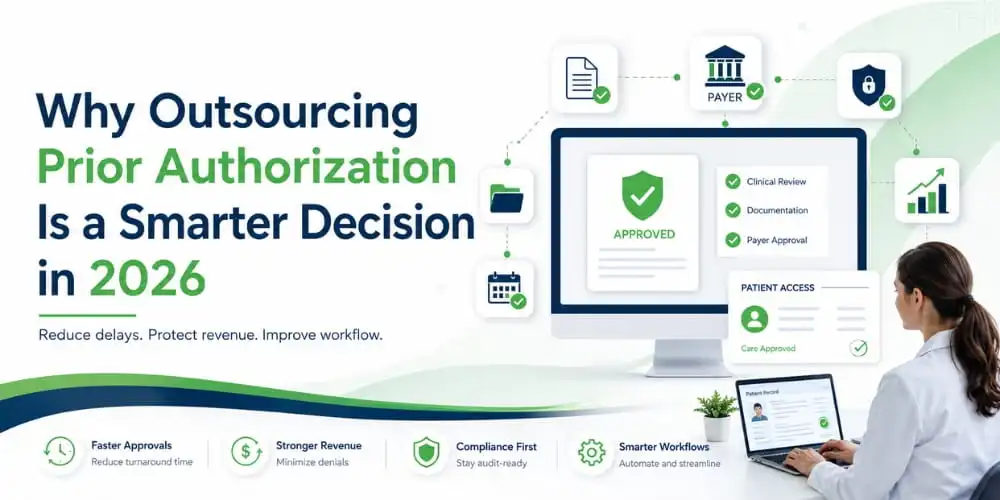
Prior authorization has become one of the most time-consuming parts of healthcare administration. In 2026, medical practices are facing stricter payer rules, faster response expectations, more documentation checks, and a growing shift toward electronic prior authorization. For many providers, outsourcing prior authorization is no longer just a cost-saving choice. It is a mature business decision that protects revenue, improves patient access, and helps clinical teams stay focused on care. The healthcare industry is moving toward a more digital authorization process. CMS now requires impacted payers to send decisions within 72 hours for urgent requests and seven calendar days for standard requests, beginning January 1, 2026. Electronic prior authorization interfaces are scheduled to go live on January 1, 2027, with a projected reduction in administrative burden and about $15 billion in savings over 10 years. Outsourcing prior authorization services is smarter in 2026 because it helps healthcare practices manage payer rules, reduce staff overload, submit cleaner documentation, track approvals faster, and lower the risk of delays or denials. Trained prior authorization specialists can handle insurance portals, clinical documentation checks, follow-ups, appeals support, and payer communication with more consistency. For busy practices, this means fewer missed authorizations, fewer delayed treatments, better revenue protection, and a smoother experience for patients. Prior authorization was once treated as a routine administrative task. In 2026, it will become a high-impact revenue cycle function. A single missed authorization can delay care, create claim denials, increase rework, and reduce patient trust. Physicians and practice teams continue to report frustration with the prior authorization process. The AMA reported in May 2026 that only 33% of surveyed physicians believed the latest insurer pledge would make a meaningful difference in prior authorization reform. This shows why practices cannot depend only on payer promises. They need their own internal system or outsourced prior authorization services in Texas to stay ahead, reduce delays, and keep approvals moving more efficiently. In 2026, prior authorization is becoming more connected to compliance, payer transparency, electronic workflows, and automation. CMS rules are pushing payers toward faster decisions and better data exchange, which means medical practices need stronger systems like medical billing prior authorization services in Texas to manage approvals without delays. This is why outsourcing prior authorization is becoming a smarter choice. The 10 points below explain how it helps practices reduce workload, prevent revenue loss, improve approvals, and create a smoother patient experience. Front desk teams, billers, medical assistants, and clinical staff already handle scheduling, eligibility, patient calls, documentation, and claim follow-up. Prior authorization adds more pressure to their day. Outsourcing gives practices a dedicated approval workflow, reduces staff overload, and helps the internal team focus more on patient service. Prior authorization has a direct impact on revenue cycle performance. Missing, expired, or incomplete approvals can lead to claim denials and delayed payments. Outsourcing helps practices submit cleaner requests, track pending cases, and follow up on time, reducing avoidable revenue loss and protecting the practice’s cash flow. Patients can become frustrated when treatment is delayed because an authorization request is still pending. Outsourced prior authorization support helps practices prepare documents early, check payer requirements, and follow up before appointments are affected. This creates a smoother care process and helps patients receive treatment with fewer administrative delays. Each insurance payer has different prior authorization rules, forms, portals, and documentation requirements. What one payer approves easily may require extra clinical proof from another. Outsourcing gives practices access to trained teams that understand payer-specific processes, helping reduce errors, missed steps, and unnecessary delays in approval. Electronic prior authorization is growing, but technology still needs accurate patient data, correct codes, complete documentation, and timely follow-up. A disorganized workflow can still cause delays. Outsourcing helps practices manage digital tools more effectively by combining automation with trained support, making the authorization process faster and more reliable. AI can support prior authorization by organizing information, identifying missing details, and speeding up repetitive tasks. Still, payer rules, medical necessity, and documentation accuracy need human review. Outsourced teams can use AI-assisted tools when carefully checking each request, creating a smarter balance between speed, accuracy, and compliance. Many prior authorization delays happen because clinical notes, codes, imaging reports, or treatment history are incomplete. Outsourcing helps practices review documentation before submission and make sure the request supports medical necessity. Prior authorization appeals services can also help strengthen denied or delayed requests with better supporting details. Better documentation can lead to cleaner submissions, fewer payer follow-ups, stronger appeals, and faster approval decisions. Specialty practices often deal with a higher volume of prior authorizations for procedures, imaging, therapies, medications, and advanced treatments. Managing all of this in-house can slow clinical operations. Prior authorization services for providers create a dedicated process for high-volume requests, helping specialty teams save time and keep patient care moving smoothly. One major challenge in prior authorization is not knowing the exact status of each request. It may be pending, approved, denied, expired, or waiting for more information. Outsourcing provides structured tracking, timely updates, and clear accountability, giving practices better control over scheduling, billing, and patient communication. When staff spend too much time chasing authorizations, the practice loses valuable time for patient care, referrals, follow-ups, and growth. Outsourcing prior authorization allows providers and teams to focus on service quality and appointment volume when trained specialists manage approvals, follow-ups, and payer communication more efficiently. Prior authorization can be managed by an internal team or by a trained outsourced team. In-house support may work for practices with low patient volume, but as payer rules, documentation needs, and authorization requests increase, Advanced IT & Healthcare Solutions can serve as a best prior authorization company for practices focused on long-term growth. Managed by the practice’s own front desk, billing, or clinical staff Gives the office direct control over authorization tasks May work for small practices with fewer daily requests Can become difficult when staff already handle scheduling, eligibility, calls, and billing Requires regular training to keep up with payer rules and portal updates May lead to delays when the internal team is busy with patient care tasks Can increase the risk of missed follow-ups, expired approvals, or incomplete submissions May require hiring extra staff as patient volume and authorization workload grow Managed by a dedicated team focused only on prior authorization tasks Gives the practice stronger workflow control with organized tracking and updates Works well for growing practices, busy providers, and high-volume specialties Reduces pressure on front desk, billing, and clinical staff so they can focus on patients Provides trained support that stays updated with payer rules, forms, and portal changes Helps speed up submissions, follow-ups, and approval status checks with fewer delays Lowers the risk of missed approvals, expired authorizations, and avoidable denials Supports practice growth without the cost, time, and stress of hiring extra in-house staff Prior authorization is changing fast in 2026 as CMS rules, electronic systems, payer transparency, AI tools, and administrative pressure push practices to rethink approvals. Electronic prior authorization services help reduce slow manual follow-ups and create a more organized approval process. For busy clinics, prior authorization services for small practices can reduce staff overload, prevent missed authorizations, protect revenue, and keep patient care moving. Outsourcing also improves documentation, tracks requests more consistently, and supports a smoother patient experience. For providers wanting better revenue cycle performance and fewer authorization headaches, outsourcing is a smart business decision for 2026 and the years ahead. Prior authorization outsourcing means hiring a trained external team to manage insurance approval requests for medical services, procedures, treatments, imaging, medications, or specialty care. The team checks payer rules, submits documents, follows up on requests, and tracks approval status. Medical practices should outsource prior authorization in 2026 because payer rules are more complex, electronic prior authorization is expanding, and delayed approvals can affect revenue and patient care. Outsourcing gives practices dedicated support without adding more pressure to in-house staff. Outsourcing can support prior authorization denial management by improving documentation accuracy, checking payer requirements before submission, and tracking requests before deadlines are missed. It does not remove every denial, but it can help lower preventable mistakes and reduce avoidable authorization-related denials. Prior authorization affects revenue cycle management because missing or incorrect approvals can lead to denied claims, delayed payments, rework, and patient billing issues. A strong authorization process helps protect cash flow before the claim is submitted. Electronic prior authorization is growing, but manual follow-up is still needed in many cases. Payer portals, documentation requests, appeal support, phone calls, and exception cases still require trained staff to manage the process correctly.Why is Outsourcing Prior Authorization Smarter in 2026?
The Prior Authorization Problem Has Changed
Why 2026 is the Turning Point for Prior Authorization
1. Outsourcing Reduces Administrative Burnout
2. It Helps Prevent Revenue Loss
3. It Supports Faster Patient Care
4. Payer Rules Are Becoming More Complicated
5. Electronic Prior Authorization Requires Better Workflow Discipline
6. AI Is Helpful, but Human Review Still Matters
7. Outsourcing Improves Documentation Quality
8. It Helps Specialty Practices Manage High-Volume Requests
9. Outsourcing Creates Better Tracking and Accountability
10. It Gives Practices More Time to Grow
In-House vs Outsourced Prior Authorization
In-House Prior Authorization
Outsourced Prior Authorization
Conclusion
Frequently Asked Questions
What is prior authorization outsourcing?
Why should medical practices outsource prior authorization in 2026?
Does outsourcing prior authorization reduce denials?
How does prior authorization affect revenue cycle management?
Is electronic prior authorization replacing manual follow-up?